
How many restrooms does a Montgomery county fair need?
Start with your expected peak attendance, not your daily total. A fair drawing 2,000 people on a Saturday afternoon needs a different count than one spread evenly over a slow Tuesday. Montgomery Porta Pros works from OSHA 1926.51(c), which sets 1 toilet for 20 workers or fewer on a jobsite, and we scale that ratio up for public events where crowds cluster near midways and grandstands. Fair organizers usually mix standard portable toilet rental units with a few deluxe flushable units near vendor rows and VIP areas. Every cluster needs at least one accessible unit under ADA Standards section 213.2, and that unit needs a 60 inch turning circle per ADA Standards section 304.3.1. For a fair running three or four days, our porta potty rental checklist walks through gate layout, generator placement, and where handwashing stations have to sit relative to food booths. If you are not sure where to start, the how many porta potties do I need guide breaks the math down by headcount and event length, and it links straight back to this page as its cluster pillar.
What does it cost to rent restrooms for a fair in Montgomery?
Pricing depends on unit count, rental length, and whether you need trailers for a grandstand area or standard units scattered through the midway. A standard portable toilet runs an event rate between $200 and $800 depending on scale, while restroom trailers for a multi-day fair run from $2,499 to $3,899 for the full event. Weekly rentals average $130 to $500 per standard unit if your fair runs mid-week into the weekend.
| unit | duration | typical price |
|---|---|---|
| standard | event | $400 |
| standard | week | $200 |
| ada | week | $185 |
| trailer | event | $3,500 |
| deluxe | week | $250 |
Delivery adds a separate fee, typically $100 to $150 for a week-long booking, and most fairgrounds need 60 feet of straight clearance behind the truck for a roll-off or trailer delivery. See the full porta potty rental cost breakdown or the restroom trailer rental cost page if you are weighing trailers against standard units for your grandstand area. Fairs on tighter budgets sometimes go with a straight porta potty rental per day plan for a single weekend event instead of a full week.
Do fairgrounds need handwashing stations separate from the toilets?
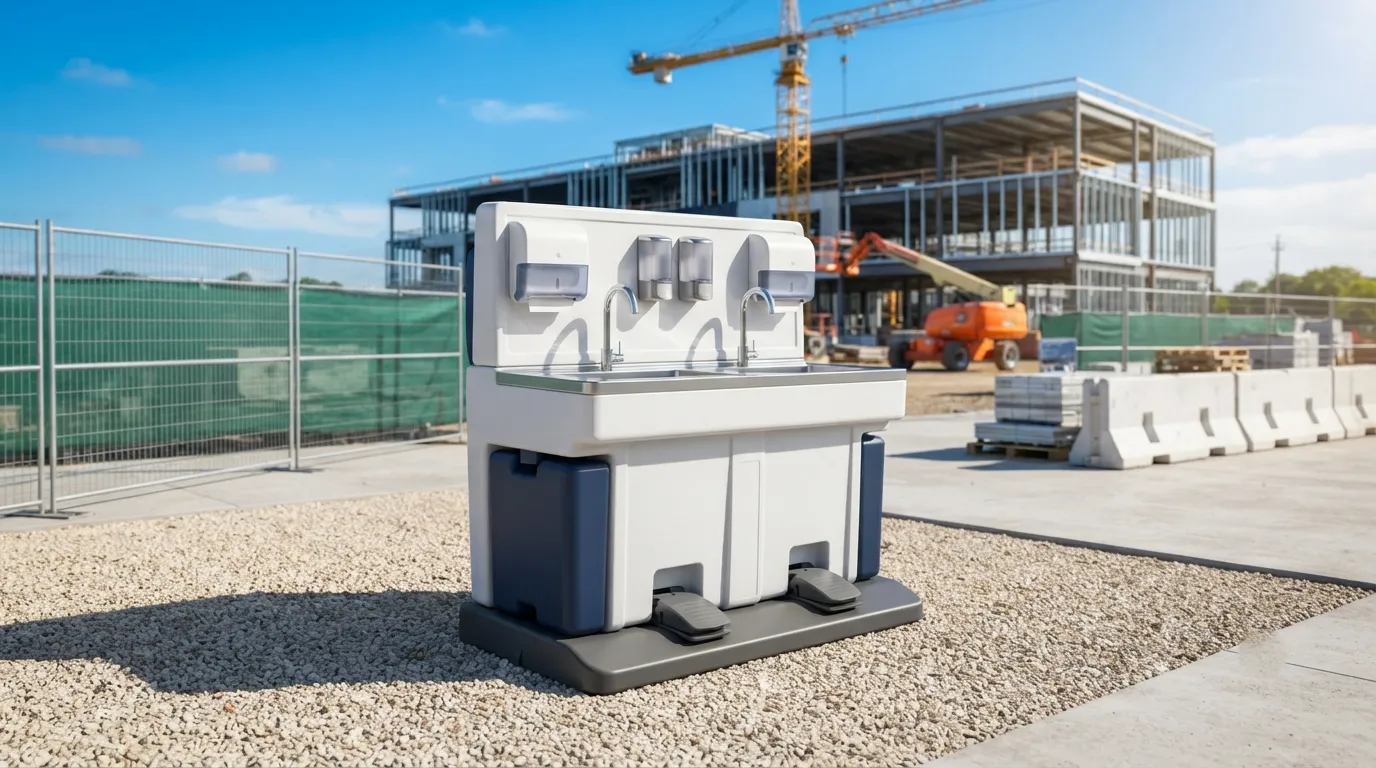
Yes, if food vendors are cooking on site. General toilet counts fall under OSHA 1926.51(c), but any operation involving paints, coatings, herbicides or insecticides triggers separate washing requirements under OSHA 1926.51(f)(1). Most county fairs do not hit that trigger directly, but food vendors handling raw ingredients still need working handwash stations under 29 CFR 1910.141(d)(2), which specifically requires soap and towels or a hand dryer. Hand sanitizer alone does not meet that standard. Montgomery Porta Pros places handwashing station rental units near every food row, separate from the toilet clusters, and larger fairs sometimes add a dedicated portable sink rental near the livestock barns where hosing down is a daily task. If your event includes a beer garden or wine tent, check our event restroom rental page for how we handle mixed foot traffic between the midway and the fenced adult beverage area, which usually calls for its own small restroom cluster.
Fair layouts in Montgomery also need to account for access roads. Vendors trucking in from Prattville, 17.5 miles northwest, or Wetumpka, 18.6 miles north, need clear drop-off windows before gates open, and our delivery scheduling works around that. We also service fairs and markets out toward Millbrook, 15.2 miles northwest, and Pike Road, 12.1 miles southeast, when county events draw crowds from both directions. Ground surfaces at fairgrounds are often gravel or grass, so ADA Standards section 302.1 requiring stable, firm, slip-resistant surfaces matters more here than at a paved lot. We stage accessible units on leveled pads to meet that standard, with a 36 inch clear route per ADA Standards section 403.5.1 leading to each one. For fencing off livestock areas or restricting midway access after hours, pair your restroom order with temporary fence rental or crowd control barrier rental since both come from the same delivery truck and cut down on separate site visits.
How far in advance should I book restrooms for a county fair?
Book 6 to 8 weeks out for a multi-day fair, longer if you need restroom trailers, since trailer inventory books up faster than standard units. Fairs are seasonal and compete with weddings and festivals for the same trailers. Call early and lock delivery dates before the fairgrounds calendar fills.
Can I mix standard units and restroom trailers at one fair?
Yes, and most fairs do exactly that. Standard units cover the midway and parking areas cheaply, while a 4 stall restroom trailer or 8 stall restroom trailer handles grandstand crowds or VIP sections where flushable fixtures matter more.
Do fairgrounds restrooms need to be serviced daily?
High-traffic fair units often need daily service, more than the standard weekly interval described in ANSI/PSAI Z4.3 for lighter-use sites. Multi-day fairs with thousands of daily visitors should plan on daily pumping and restocking, not the once-a-week baseline.
What size dumpster pairs with a county fair restroom order?
Most fairs add a 20 yard dumpster rental for food vendor waste and general trash, sized up to a 30 yard dumpster rental for larger multi-day events with livestock bedding or heavy vendor turnover.
Does Montgomery Porta Pros handle permits for fairground restroom placement?
Placement in a public right of way or on county fairground property needs confirming with the city before delivery. We are not naming a specific permit rule here since it depends on your exact site, so check our porta potty permit requirements page and confirm with local officials directly.
Next step
Get a delivery date
Tell us the address, the dates and the headcount. We size the order and confirm the route.