
How many restrooms does a Montgomery race need?
Race organizers in Montgomery size restrooms by runner count and course layout, not by a flat formula. OSHA 1926.51(c) sets construction ratios of one toilet per 20 workers, and race directors use that same logic as a starting benchmark before adjusting for spectators. A start line with 500 runners and a two-hour wave window behaves differently than a finish festival where people linger for hours. Course length matters too: a marathon route stretching well past 12 miles needs restrooms staged at multiple aid stations, not just clustered at the start and finish. Our porta potty placement guide breaks down spacing along a course. For most Montgomery races, that means one cluster near the start corral, one or two along the route at aid stations, and a heavier concentration at the finish line where crowds hold longest. If your race pulls from Pike Road, 12.1 miles southeast, or Prattville, 17.5 miles northwest, factor in the extra runners those areas add to your headcount. Check our how many porta potties do I need guide for a full breakdown by attendance.
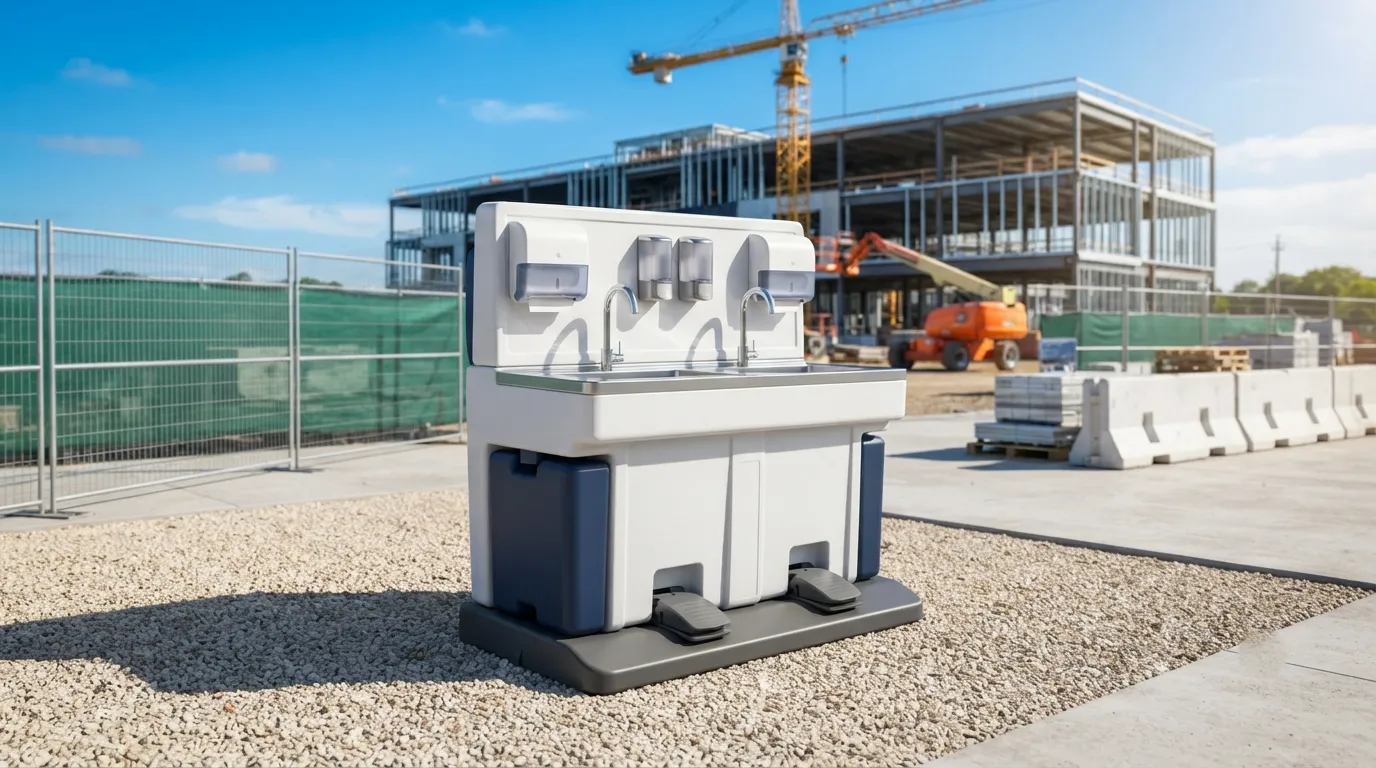
ADA Standards section 213.2 requires that at least 5 percent of clustered single-user units be accessible, with a minimum of one no matter how small the cluster. That means even a 6-unit start line bank needs an ADA accessible porta potty in the mix. Pair that with a handwashing station rental near any aid station serving food or gels, since runners handle shared supplies there.
What does marathon restroom rental cost in Montgomery?
Race restroom pricing runs by event day and unit type, not a flat per-runner rate. A standard unit for an event-length rental typically falls between $200 and $800, while an ADA unit runs $200 to $400 for a single day. Restroom trailers for race-day events, especially finish-line VIP or medical tent use, run higher.
| unit | duration | typical price |
|---|---|---|
| standard | event | $400 |
| ada | day | $230 |
| trailer | event | $3,500 |
| service_fee | day | $175 |
Delivery fees for race day typically land near $150, though early-morning drop-off or tight street closures can push that toward $500 depending on access. If your race route crosses through Wetumpka, 18.6 miles north, or Millbrook, 15.2 miles northwest, mention that when you request a quote so delivery routing gets planned around road closures. See our restroom trailer rental cost page and porta potty rental cost page for fuller breakdowns by duration.
Races that also need power for timing mats, PA systems or lit finish arches should plan electrical support alongside restrooms. A temporary power pole rated for a 200 amp service handles most race-day electrical loads, and knowing how to brace a temporary power pole matters on race morning: the pole needs a stable base plate or guy-wired support so wind and foot traffic near a crowded finish chute don't tip it. Pair that with a light tower rental if your race starts before sunrise, which is common for Montgomery summer events avoiding midday heat.
Where should restrooms go on a race course?
Restrooms belong wherever runners cluster and wherever a route narrows enough that a line would block traffic. Start corrals need the heaviest bank, since hundreds of runners use restrooms in the 30 minutes before the gun. Aid stations at mile markers need smaller clusters, usually 2 to 4 units, positioned off the running lane but within easy walking distance. ADA Standards section 403.5.1 requires a minimum 36-inch clear route to reach each unit, so avoid staging restrooms behind barricades, gravel embankments or grass ruts that block wheelchair access. Section 405.2 caps ramp slope at 1:12 if any elevation change sits between the path and the unit pad.
Finish-line restrooms need the biggest bank of all, since runners and spectators overlap for hours after the last finisher crosses. Consider a 4 stall restroom trailer or 8 stall restroom trailer at the finish festival if your race includes a post-race expo or awards ceremony. Temporary fence rental around the restroom bank keeps queue lines organized and separates them from vendor booths. For races drawing crowds from Coosada, 16.0 miles north, or Blue Ridge, 15.3 miles northeast, that queue management matters more since out-of-town runners don't know the venue layout. Our festival restroom rental and concert restroom rental pages cover similar crowd-density staging if your race includes a post-run concert or vendor village.
How far in advance should I book race restrooms?
Book as soon as your race date and route are locked, ideally 60 to 90 days out for large marathons. Montgomery race season overlaps with other events competing for the same trailer and unit inventory, so early booking secures your preferred delivery window and unit count.
Do marathon restrooms need to be ADA accessible?
Yes. ADA Standards section 213.2 requires at least one accessible unit per cluster, even a small aid-station bank. Larger clusters need 5 percent of units to meet that standard, so a 20-unit finish-line bank needs at least one dedicated ADA unit.
Can restrooms be moved along the course after setup?
Units can be repositioned before race day, but not once porta potties are serviced and secured for event morning. Confirm your final course map and aid station locations with your provider at least a week ahead.
What if my race route crosses township lines?
Confirm placement rules with each municipality your course crosses, since permit requirements differ by town. See our porta potty permit requirements page, and check our service areas page for coverage details near Redland and Emerald Mountain.
Do I need handwashing stations at aid stations?
Yes, especially where runners handle shared food, gels or water cups. A portable sink rental or hand sanitizer station rental at each aid station keeps volunteers and runners covered between restroom visits.
Next step
Get a delivery date
Tell us the address, the dates and the headcount. We size the order and confirm the route.