
Where should a porta potty go on site?
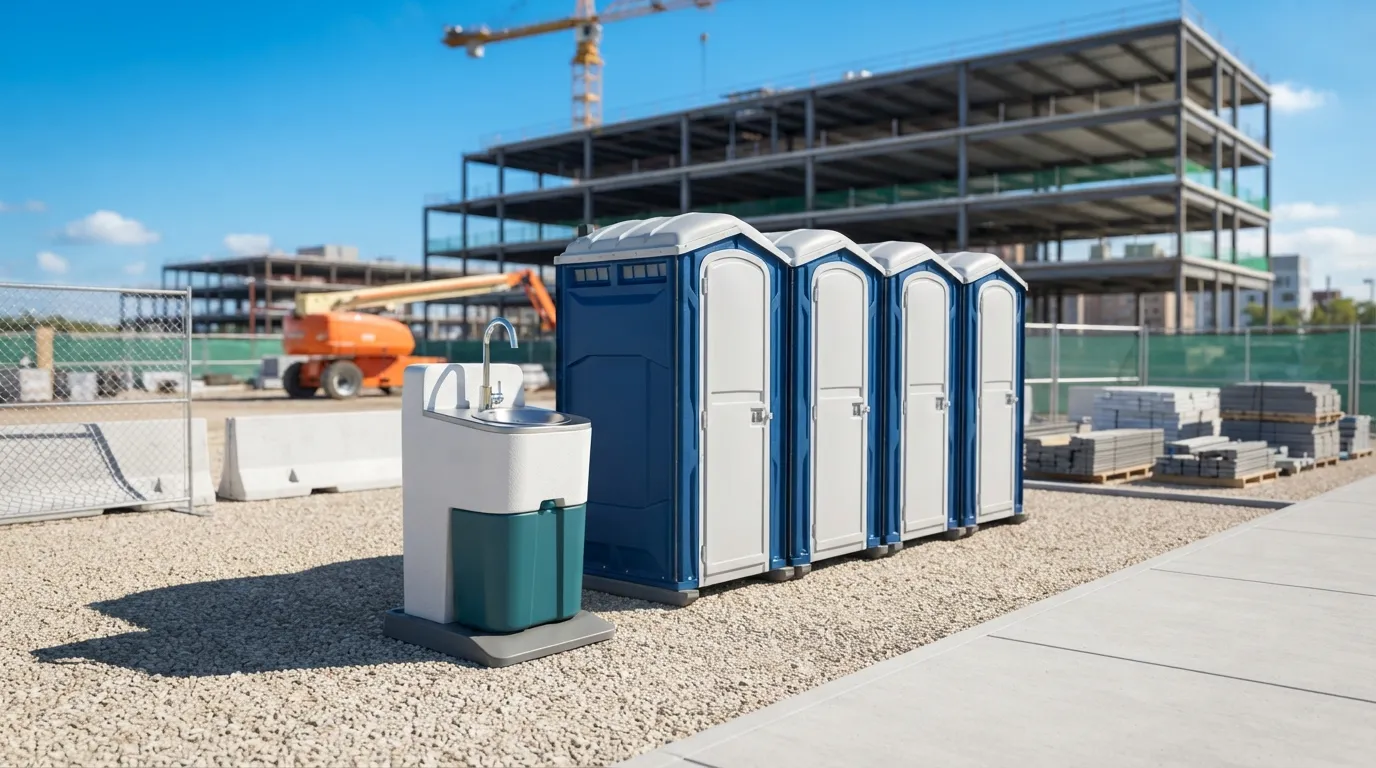
Pick flat, stable ground first. ADA Standards section 302.1 calls for surfaces that are stable, firm and slip resistant, and that rule applies whether you're setting one unit behind a house for home renovation work or a dozen units across a festival lot. Keep the unit away from soft dirt, slopes, and storm drains. Service trucks need a straight approach, so leave room the same way you would for a roll-off dumpster rental: our drivers ask for about 60 feet of clearance behind a roll-off truck, and portable restroom trucks want a similar straight shot for the vacuum hose. If you're setting up an ADA accessible porta potty, the unit needs a 60 inch turning circle in front of the door per ADA Standards section 304.3.1, plus a 32 inch clear door opening under section 404.2.3. Check our porta potty rental checklist before delivery day so the pad is ready when the truck shows up.
What are the porta potty placement rules for construction sites?
OSHA doesn't regulate exact placement distance, but it does regulate access and count. 1926.51(c)(1) sets toilet ratios by crew size: one unit for 20 workers or fewer, then one toilet seat and one urinal per 40 workers as the crew grows past that, and one per 50 once you hit 200 workers. That means placement has to account for foot traffic patterns across the whole job site, not just a convenient corner. For construction site services in Montgomery, we usually recommend clustering units near the break area but away from active excavation or crane swing radius. If your crew mixes trades, our OSHA portable toilet requirements page breaks down counts by worker total. Farms and agricultural operations follow a different standard: OSHA 1928.110 requires field sanitation within a quarter mile walk of hand-labor employees, one facility per 20 workers, which changes placement logic entirely for farm and agricultural restrooms.
Do I need a permit to place a dumpster or porta potty in Montgomery?
Maybe, and it depends on where the unit sits. If placement lands in the public right of way, on a street or sidewalk instead of private property, that needs confirming with the City of Montgomery before delivery. We don't guess at ordinance numbers here because permit rules vary block to block and change over time. Dumpster placement permit cost and porta potty permit requirements both fall into this same gray zone: check with the city first, then lean on our dumpster permit requirements and porta potty permit requirements pages for the questions to ask when you call. If you're placing a temporary fence rental around the unit for a public event, that's often the trigger that brings a permit into play, even when the toilet itself wouldn't need one on private land.
How much space does a portable restroom actually need?
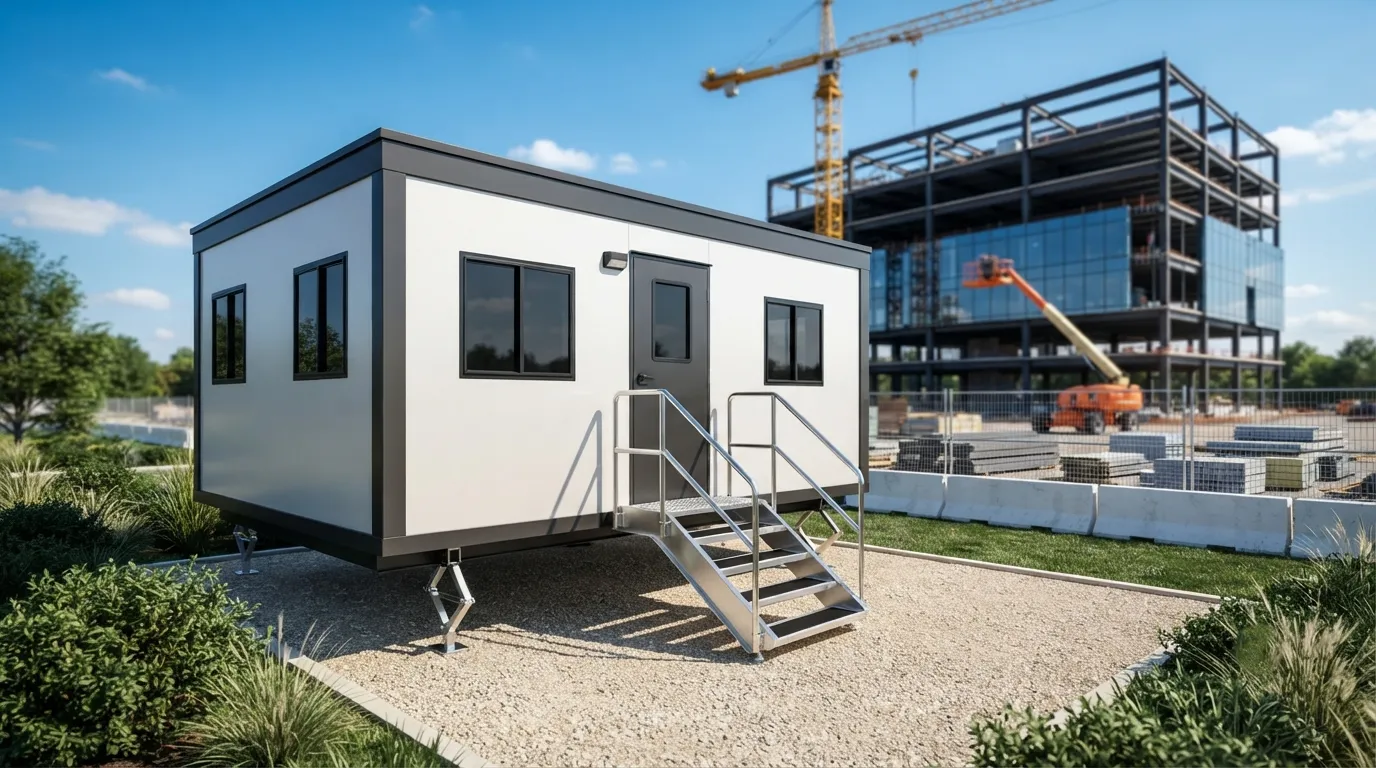
A standard unit measures about 44 by 48 inches on the ground and stands roughly 92 inches tall, so give it a footprint bigger than a card table with headroom to match. Trailers need more. An 8 stall restroom trailer or a 4 stall restroom trailer needs a level pad plus room for the service technician to open access panels on the side, and a mobile office trailer rental parked nearby for site staff needs its own clearance too, including space to swap mobile office trailer replacement doors if one gets damaged on a long job. Storage containers follow the same rule: a 20ft storage container or 40ft storage container rental needs flat ground and truck access on delivery day, same as a portable sink. If a job site sink breaks down, Ozark River portable sink replacement parts are worth asking your vendor about before you assume you need a whole new portable sink rental unit.
| unit | day | week | month |
|---|---|---|---|
| standard | 100-350 | 130-500 | 125-325 |
| ada | 200-400 | 120-240 | n/a |
| deluxe | 85-1200 | 150-290 | n/a |
Delivery fees run separately, typically 100 to 500 dollars for a single day and 50 to 150 for a week, based on distance and site access. Placement complexity, tight alleys, gated lots, uneven grades, can push that toward the higher end. For a porta potty rental cost breakdown that includes delivery math, see our dedicated page, and if you need daily pricing specifically, check porta potty rental per day.
Placement also affects service. Standard servicing follows ANSI/PSAI Z4.3, a baseline of one visit per week for up to 10 users across a 40 hour week, and a technician needs clear access to hit that schedule without disrupting the site. Handwashing stations get placed near food service or heavy soiling zones, and 29 CFR 1910.141(d)(2) requires soap and towels or a hand drying device at those stations, not hand sanitizer alone. If your crew works with paints, coatings or chemical treatments, OSHA 1926.51(f)(1) requires washing facilities for that exposure specifically, which usually means placing a handwashing station rental right at the work zone. Municipal septic work follows its own logic too. A placerville septic pumping service crew would tell you the same thing we tell Montgomery customers: keep tank access clear so the pump truck hose reaches it, since a typical residential tank gets pumped every 3 to 5 years and needs a straight path for the hose each time. Our septic pumping service page covers access requirements in more depth.
Montgomery job sites vary enough that a placement plan for a downtown lot won't work 15 miles out near Millbrook or Prattville. If you're planning an event out toward Pike Road, 12.1 miles southeast of Montgomery, factor that drive into delivery scheduling. Our service areas page covers surrounding towns, and event restroom rental planning should start with a site walk, not a guess.
How far should a porta potty be from a house or event tent?
Keep it close enough for easy access but far enough to avoid odor drift toward seating or windows, generally 20 to 50 feet works for most residential and event setups. Ground has to stay level per ADA Standards section 302.1. Check wind direction before final placement.
Can I place a porta potty on the street in Montgomery?
That depends on whether it counts as the public right of way, which needs confirming with the City of Montgomery. Private driveways and lots don't usually trigger the same review. Call ahead of your event date so placement doesn't delay delivery.
What ground surface works best for a portable restroom?
Flat, compacted surfaces like asphalt, concrete or packed gravel work best. Soft grass or mud after rain can tip a unit or trap the service truck. ADA Standards section 302.1 requires stable, firm, slip resistant surfacing for accessible units specifically.
How much clearance does a dumpster need for delivery?
Plan for about 60 feet of straight clearance behind the truck so the roll-off can be dropped and picked up without backing through obstacles. Overhead wires and low branches matter too. Check our dumpster sizes and dimensions page before delivery.
Do ADA accessible units need special placement?
Yes. They need a 60 inch turning circle per ADA Standards 304.3.1 and a 32 inch clear door opening per section 404.2.3. Under ADA Standards 213.2, at least 5 percent of clustered units, and never fewer than one, must be accessible.
Next step
Get a delivery date
Tell us the address, the dates and the headcount. We size the order and confirm the route.