
What Does ADA Actually Require for Portable Restrooms?
The core rule is simple: when single-user units are grouped together, at least 5 percent must be accessible, and that floor is never zero, even with a small cluster (ADA Standards section 213.2). One ADA accessible porta potty covers most small Montgomery jobsites and neighborhood events outright. The unit itself has to work for someone using it, not just sit there labeled. That means a door opening of at least 32 inches clear (ADA Standards section 404.2.3), a 60 inch turning circle inside or adjacent to the unit (ADA Standards section 304.3.1), and a path to reach it that is at least 36 inches wide (ADA Standards section 403.5.1). None of that is optional once you have triggered the 5 percent rule. If you are staging restrooms for a wedding at a Montgomery venue or a fair south toward Pike Road, 12.1 miles southeast, the same math applies. Bigger events need more units overall, so check our guide on how many porta potties you actually need before you order.
Where Does the Accessible Unit Need to Go?
Placement matters as much as the unit itself. Ground and flooring under and around the unit must be stable, firm and slip resistant (ADA Standards section 302.1), which rules out loose gravel or soft turf as a landing pad in most Montgomery settings. Controls inside, like the door latch and any vent flap, have to be operable with one hand and no more than 5 pounds of force, without tight grasping or twisting (ADA Standards section 309.4). Reach to anything mounted inside, hand sanitizer dispenser or tissue holder, tops out at 48 inches high and no lower than 15 inches (ADA Standards section 308.2.1). If the accessible unit sits on a ramp or graded approach, that slope cannot exceed 1:12 (ADA Standards section 405.2). Our porta potty placement guide walks through grading and clearance in more detail, and it is worth reading before delivery day rather than after the truck is already stuck on soft ground.
Do Construction Sites in Montgomery Need ADA Units Too?
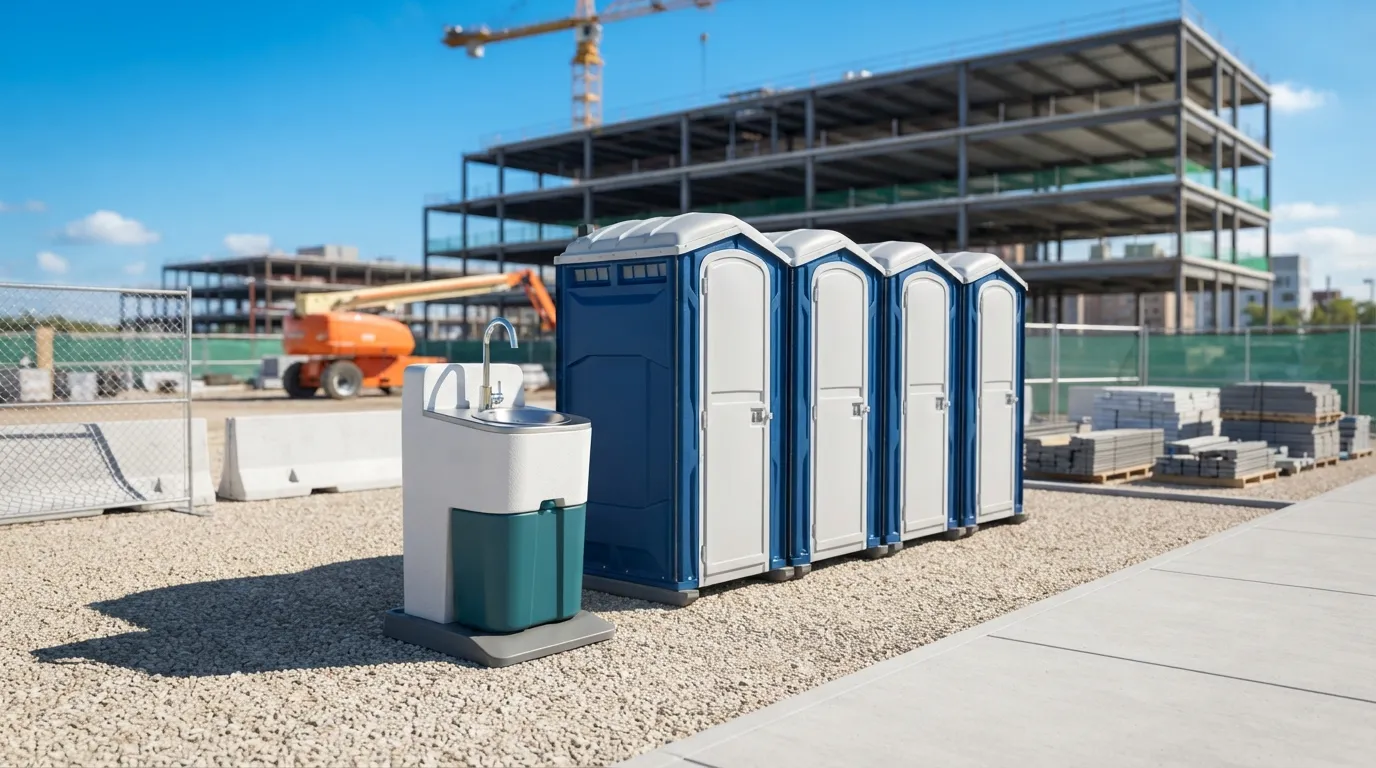
Yes, and OSHA sets a separate floor under all of it. Construction sites need 1 toilet for 20 workers or fewer, scaling to 1 toilet and 1 urinal per 40 workers between 20 and 200, and per 50 workers above that (OSHA 1926.51(c)(1)). ADA accessibility sits on top of that count, not instead of it. A 60-person crew working a Montgomery site needs roughly two standard toilets under OSHA math, plus at least one of the total made accessible under ADA Standards 213.2. Potable water also has to be on site under OSHA 1926.51(a)(1), which most construction site services packages bundle in with the restroom order anyway. For a full breakdown of the OSHA side by crew size, see our OSHA portable toilet requirements page. Renovation crews working a single Montgomery house are usually well under the ADA trigger, so a home renovation porta potty rental without an accessible unit is often fine, but a public-facing job or a multi-contractor site should not assume that.
Can I Rent Just One ADA Unit for a Small Event?
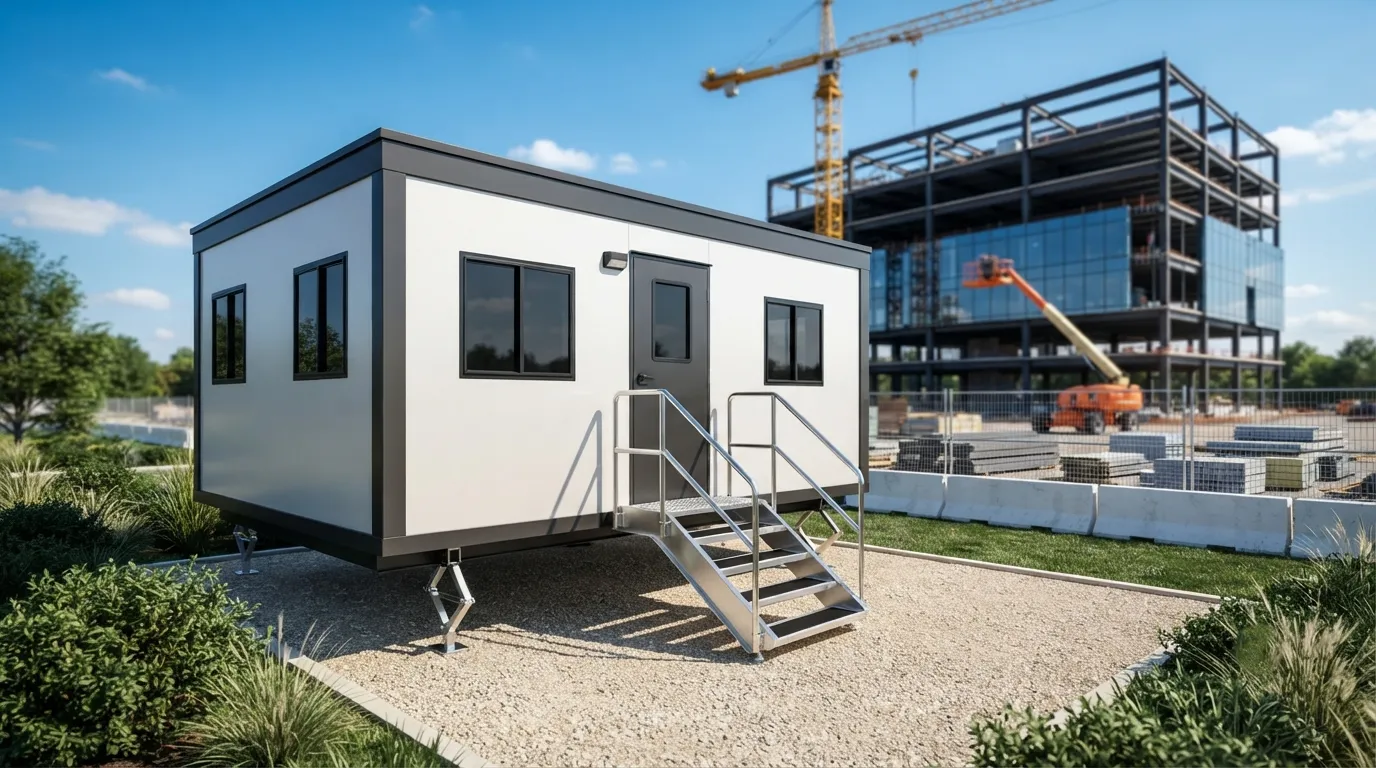
Yes. A single accessible unit satisfies the requirement for most small Montgomery gatherings, and it is priced close to a standard rental.
| unit | duration | low | typical | high |
|---|---|---|---|---|
| ada | day | $200 | $230 | $400 |
| ada | week | $120 | $185 | $240 |
Weekend rentals for a single ADA unit run in a similar band to the daily rate, so a Saturday wedding or graduation party does not need a week-long commitment. If you are planning a wedding restroom rental or a smaller event restroom rental anywhere from downtown Montgomery out toward Millbrook, 15.2 miles northwest, one accessible unit alongside a couple of standard porta potty rentals usually clears both the headcount and the accessibility requirement. Larger festivals and fairs need the math redone with total attendance, not just worker count; the festival restroom rental and county fair restrooms pages cover that math for their own crowd sizes. Delivery fees are separate from the unit rate and scale with distance and duration, so ask for those broken out on your request a quote form.
Montgomery Porta Pros stocks accessible units alongside deluxe flushable and standard models, so you are not stuck ordering ADA units from a separate vendor. Check the porta potty rental cost page for how ADA pricing compares across daily, weekly and monthly terms before you commit.
Does every portable toilet need to be ADA compliant?
No. Only the required percentage under ADA Standards section 213.2 needs to meet accessibility specs, minimum one unit per cluster. The rest can be standard units. Mixing models is normal and keeps overall rental cost down for larger orders.
How wide does the door need to be on an ADA porta potty?
At least 32 inches of clear opening, per ADA Standards section 404.2.3. Combined with the 60 inch turning circle inside (ADA Standards section 304.3.1), that is noticeably roomier than a standard 44 by 48 inch unit footprint.
Can hand sanitizer stations replace handwashing units for compliance?
No. Sanitizer does not satisfy 29 CFR 1910.141(d)(2), which requires soap and towels or a drying device where washing facilities are mandated. A handwashing station rental alongside your restrooms covers that requirement properly.
Is the ADA unit requirement the same for events and construction sites?
The 5 percent minimum under ADA Standards 213.2 applies to any cluster of single-user units, event or jobsite. Construction sites layer OSHA 1926.51(c)(1) worker-count ratios on top, so job sites often need more total units than a comparable-sized event.
Where in Montgomery can accessible units be delivered fastest?
Montgomery Porta Pros delivers accessible units across the city and into nearby communities like Prattville, 17.5 miles northwest and Wetumpka, 18.6 miles north. Confirm exact lead times on the contact page when booking.
Next step
Get a delivery date
Tell us the address, the dates and the headcount. We size the order and confirm the route.